


Rental Family (2025) Review

Loneliness is one of the major crises of modern Japan. In the middle of bustling streets and packed commuter trains, an increasing number of people feel profoundly disconnected from those around them. Social pressure, economic precarity and the relentless pace of urban life have pushed many to the margins- with some retreating entirely into their rooms as ‘hikikomori’, shut off from the world for months or even years. Out of this landscape of isolation, an unusual industry has emerged: one that offers companionship, emotional support and even the illusion of family, all for a fee.
First brought to wider attention in Kaspar Astrup Schröder’s 2012 documentary ‘Rent a Family Inc.’, the business of hiring stand-in relatives has grown from a niche curiosity into a discreet but thriving service. Agencies supply everything from surrogate spouses to temporary parents, offering clients the comfort or social legitimacy they struggle to find on their own. It’s a practice that blurs performance and intimacy, raising uneasy questions about what family means when it can be bought by the hour.

Cinema has returned to this world repeatedly. Werner Herzog’s 2019 drama ‘Family Romance, LLC’ followed Yuichi Ishii, a real rental-family entrepreneur playing himself, after he’s hired to impersonate the father of a young girl. Takehito Sakamoto’s 2023 offering ‘Rentaru Famirii’- again starring Ishii- dealt with a similar premise, exploring the emotional fallout of a mother hiring a rental father for her daughter. The industry’s strange blend of need and artifice continues to fascinate filmmakers, reflecting a society where connection is increasingly commodified.
Hikari’s ‘Rental Family’ is the latest work to explore this terrain. It follows Phillip Vanderploeg, an American actor trying to eke out a living in Tokyo. One day, his agent gets him an unusual gig: working as the “token white guy” at a rental family business. Soon, he stumbles into a renewed sense of purpose, gaining a deeper understanding of the connections people cling to, even if manufactured.

Hikari and Stephen Blahut craft a narrative both funny and quietly devastating, a heartfelt exploration of life and loneliness in a modern metropolis. As Phillip drifts through his assignments, the film unfolds through the stories of the people he meets- especially Mia, a young girl who needs a father figure to secure a place at a prestigious school, and Kikuo Hasegawa, a retired actor facing the early fog of dementia.
Their lives form a tapestry of longing and vulnerability, revealing a different facet of human need. Phillip himself is no exception; adrift in a foreign city, he even pays for intimacy, a quiet echo of the very service he provides. Like Wim Wenders’ ‘Perfect Days’, the film suggests that even the smallest gestures of companionship can carry enormous emotional weight. Contemporary Japan becomes the backdrop for this search- a place where people crave closeness and will cherish it, even when it arrives in a technically artificial form.

The supporting characters deepen this portrait. Aiko, Phillip’s colleague, handles the less glamorous cases, including the surreal “apology service,” where she plays the mistress of unfaithful husbands, begging forgiveness on their behalf. Shinji, the company’s enigmatic founder, carries secrets of his own that eventually illuminate why he built a business devoted to manufactured intimacy. Phillip’s delicate balancing act between professional detachment and emotional involvement becomes the film’s engine. His strained relationship with his own father is never overstated, yet deeply shapes the bonds he forms with Mia and Kikuo.
Even Phillip’s briefer encounters- with a lonely man seeking a videogame playmate, or a woman who simply wants an audience for her burlesque show- are rendered with tenderness. Beneath it all runs the story of a man trying to understand a new culture, to find acceptance and to carve out meaning in a city that barely seems to notice him. The film occasionally edges toward oversentimentality, but it never tips over; its sincerity feels earned, grounded in the small, fragile truths of the people Phillip meets.
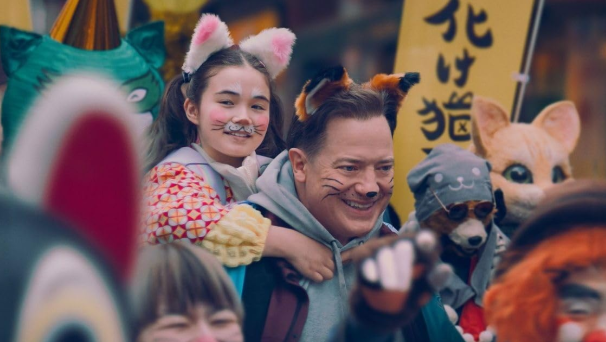
Visually, the film is often breathtaking. Hikari and cinematographer Takuro Ishizaka frame Tokyo with a quiet, observational beauty: soft morning light spilling across cramped apartments, intimate close‑ups that linger just long enough to catch interior thoughts. The camera rarely intrudes; instead, it watches with a gentle patience mirroring Phillip’s own tentative steps through the city. There’s a melancholy elegance to the imagery, a sense that every shot is holding its breath.
Jon Thor Birgisson and Alex Somers’ score deepens this mood. Elegiac and restrained, it moves in delicate waves, at times reminiscent of the atmospheric work of Nick Cave and Warren Ellis. Sparse piano motifs and low, trembling strings underscore the film’s emotional undercurrents without overwhelming them. The music seems to hover at the edges of scenes, giving voice to the feelings the characters can’t articulate. It’s a soundtrack that understands the film’s central truth: loneliness is rarely loud, but always present.
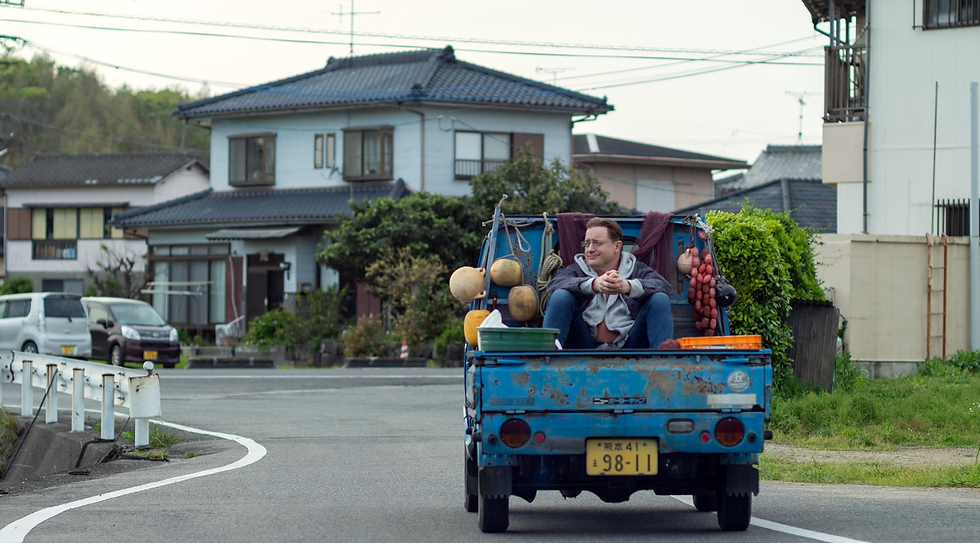
As Phillip, the immensely likable Brendan Fraser carries a palpable poignancy, his eyes revealing a subtle sadness lingering beneath every hesitant smile. Few actors convey vulnerability as naturally as Fraser. Here he wears his heart on his sleeve, delivering a performance that is raw, gentle and deeply sympathetic. He captures the awkwardness of a man unsure of his place in the world, yet also the warmth of someone who desperately wants to connect.
Shannon Mahina Gorman is a natural presence, bringing a spark of life and energy to the role of Mia. She and Fraser have an easy, unforced chemistry, grounding the story in small, human moments that feel lived‑in rather than performed. Takehiro Hira brings a compelling stillness to Shinji, playing him with a calm, almost inscrutable reserve, allowing the eventual revelations about his own home life land with quiet force. As Aiko, Mari Yamamoto is equally strong, her weary professionalism masking a deep well of empathy. Further, Akira Emoto brings a fragile dignity to the role of Kikuo that is most heartrending.

The Beatles sang “You Can’t Buy Me Love,’ but in the case of Hikari’s ‘Rental Family,’ the opposite is true- and the result is more heartfelt and endearing than one might expect. Beautifully shot and scored, and featuring strong performances, it is hard to fault. In conclusion, although ‘Rental Family’ may deal in temporary bonds, its emotional impact is anything but short‑term.


