


Hullumeelsus (1969) Review
Updated: Aug 20

Estonian cinema in the late 1960s existed in a state of transformation. In ‘New Waves, New Spaces: Estonian Experimental Cinema of the 1970s’, Eva Näripea cites literary critic Mart Velsker, arguing that the innovative spirit of the 60s was expressed most vividly between 1968 and 1972. Yet the same paper notes that many local critics place the birth of "true" Estonian New Wave about a decade later.
Although Estonian cinema from this time remains relatively unfamiliar to international audiences, it produced a remarkable number of ambitious films. The surreal science-fiction of 1979’s ‘Dead Mountaineer's Hotel’, for instance, exemplifies the imaginative, formally adventurous cinema emerging during the later period, while the experimental work of the late 1960s points towards ideas that would become increasingly prominent in the decade that followed.

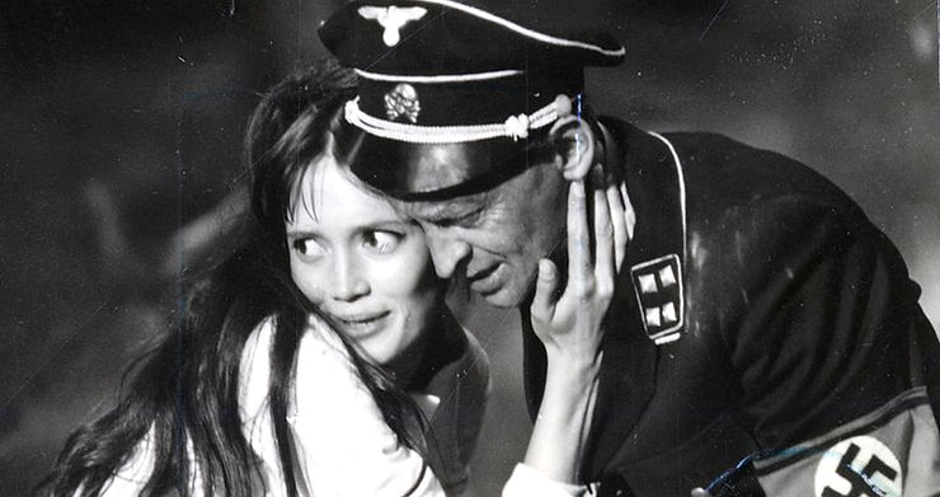
Released in 1969, Kaljo Kiisk's strange and stylish ‘Huulumeelsus’ occupies an intriguing position within this history. Predating the New Wave proper, its original approach makes it difficult to regard simply as a conventional product of its time. Ostensibly, it follows Gestapo officer August Windisch, who is sent to a psychiatric hospital to find an English spy. What initially appears to be a straightforward investigation soon becomes something far more surreal- for Windisch and the audience.
As Windisch attempts to determine which of the patients is the English spy, Kiisk blurs the distinction between those inside the hospital and the world beyond it. The patients may be considered insane, but they exist within a society that has itself descended into a collective madness. The hospital is more than a setting for Windisch's investigation; it is a microcosm of a world in which violence, paranoia and ideological fanaticism are normalised. The supposedly rational authorities are engaged in a war that has brought extraordinary destruction and barbarism, while those labelled insane are left to observe the absurdity surrounding them. In such a world, where exactly does sanity end and madness begin?

Unusual in tone, screenwriter Viktors Lorencs keeps proceedings from becoming too dry, injecting the narrative with a vein of absurdist comedy. His dialogue is sharp, while the characterisation is generally strong, even if some supporting roles are a little archetypal. Running at a little under 80 minutes, the film is engaging, with a central mystery that is, for want of a better term, genuinely mysterious. A third-act twist isn’t wholly unpredictable, but still comes as something of a surprise.
Visually, ‘Huulumeelsus’ is memorable. The asylum feels otherworldly and strangely sterile with a surreal architectural style making little logical sense. The colour white dominates; the entire place resembling a vast padded cell. A short but impactful dream sequence in the third act, where the walls fall away to reveal a beautiful field, provides a stark juxtaposition to this clinical environment. Black hues and dark furniture stand out sharply against the overwhelming white, like ink blots on a Rorschach test. Anatoliy Zabolotskiy's cinematography is strikingly crisp, making particularly effective use of close-ups; actors' faces are canvases, with every emotional flicker captured.

The costume design by Halja Klaar likewise relies heavily on whites and blacks, with the simple clothing heightening the film's offbeat tone. Eugen Rozenthal's editing keeps proceedings moving smoothly, while Lembit Veevo's score makes effective use of diegetic music- most notably the harmonica- alongside larger, more dramatic pieces. Conversely, some of the post-dubbing and ADR is quite off, particularly noticeable when anyone laughs. However, while a little jarring at times, it also heightens the film's uncanny atmosphere.
As Windisch, Jüri Järvet delivers a multifaceted performance, astutely portraying the character's gradual unravelling. He leads the cast strongly, while Voldemar Panso does fine work as head doctor Peaarst, who is always on the verge of saying something important, but never does. As Willy, a war hero traumatised by his experiences, Bronius Babkauskas has some good moments, as does Elvyra Žebertavičiūtė as Nurse Lucia. Valeri Nosik is similarly effective as a writer who believes he is friends with the devil, while Mare Garsnek makes a strong impression as Sophie, an intense inmate almost certainly hiding something- but what?
Kaljo Kiisk's ‘Huulumeelsus’ is a visually striking work that can be viewed as an early precursor to many of the artistic and philosophical concerns that would become increasingly prominent in Soviet filmmaking. It’s a strange film, but one with thematic substance. Well-acted, sharply written and beautifully realised, it is an intriguing glimpse of an Estonian cinema on the cusp of transformation- a film that arrived before the New Wave, but somehow already seemed to be riding it.


