


The Pope of Greenwich Village (1984) Review

Few actors have had a career as curious as Eric Roberts. Once regarded as one of Hollywood’s most promising young talents, Roberts delivered a series of compelling performances in the late 70s and early 80s. From Frank Pierson’s ‘King of the Gypsies,’ to Jack Fisk’s ‘Raggedy Man’ and Bob Fosse’s ‘Star 80’, he demonstrated remarkable versatility and emotional range. Yet, despite the promise of those early roles, Roberts’ star began to fade, his trajectory shifting towards the world of B-movies and straight-to-video productions.
Before his career took that turn, however, Roberts delivered one of his most memorable performances, in Stuart Rosenberg’s ‘The Pope of Greenwich Village.’ Based on Vincent Patrick’s novel, it follows cousins Charlie and Paulie, two small-time crooks with expensive tastes and little money. When they are both fired from their jobs, Paulie persuades Charlie to join him in a seemingly foolproof robbery, setting in motion a chain of events threatening to destroy their lives.
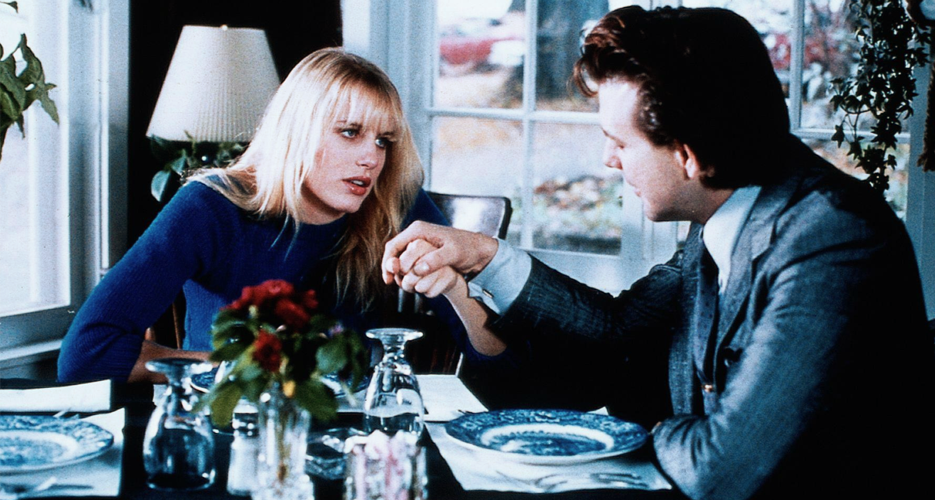
Written by Patrick, it’s a strange film, overwrought and meandering, yet undeniably compelling. The narrative is an odd mixture of crime thriller and character study, following the two cousins as their ill-conceived robbery plunges them into dangerous territory. But what begins as a relatively straightforward heist soon spirals into a tale of betrayal, violence and desperation, with the pair’s increasingly strained relationship at its centre.
Rosenberg takes time establishing the characters and their circumstances, with the better part of an hour passing before the story really gets going. Once it does, however, the film races around like a headless chicken, before coming to an abrupt and somewhat unsatisfying conclusion. Yet, for all its structural shortcomings, it remains an engaging watch, thanks in no small part to the sharp, often funny dialogue.

Patrick’s characterisation is generally convincing, with Charlie and Paulie’s flaws and ambitions lending their relationship a degree of authenticity. Some of the supporting characters, however, are considerably less successful, veering into cliché. Chief among them is the film’s principal mob boss, Bed Bug Eddie, who is about as menacing as a kitten with cork on its claws.
Visually, the film has a gritty, earthy quality, lending it an immersive sense of place. John Bailey’s cinematography neatly captures the dingy streets and seedy corners of New York’s Little Italy; a convincing portrait of a neighbourhood where ambition and desperation go hand in hand. Dave Grusin’s stirring score adds to the atmosphere, although the repeated use of Frank Sinatra’s ‘Summer Wind’- cropping up no fewer than three times- feels less like a recurring motif and more like a contractual obligation.

The performances are strong, though, with Roberts and Mickey Rourke making for an engaging double act. Rourke gives a nuanced performance, bringing an understated charm to Charlie, while Roberts is wonderfully animated as the impulsive, scheming Paulie. Occasionally, he overacts, though, turning the character’s jittery energy up way past eleven. Nevertheless, the chemistry between the two is convincing, lending their relationship a believability that keeps things from veering completely off the rails.
Imbuing the character with an effective world-weariness, Kenneth McMillan is terrific as Barney, a safecracker past his prime who joins the cousins on the heist. Daryl Hannah does fine work as Charlie’s long-suffering girlfriend, Diane, while Jack Kehoe and Geraldine Page are equally convincing as a cop and his mother, respectively. Tony Musante also delivers a strong performance, though Burt Young is less successful as Bed Bug Eddie, more a walking caricature than a fully fleshed-out character.

Stuart Rosenberg’s ‘The Pope of Greenwich Village’ is an uneven film, though by no means a bad one. Its flaws are outweighed, to some extent, by its gritty visual style, sharp dialogue and strong central performances. Most of all, it serves as a reminder of what Eric Roberts was capable of before his career took a very different path. In short, ‘The Pope of Greenwich Village’ is no holy masterpiece, but is one hell of a good time.


