


Dead Mountaineer's Hotel (1979) Review
Updated: Jan 23
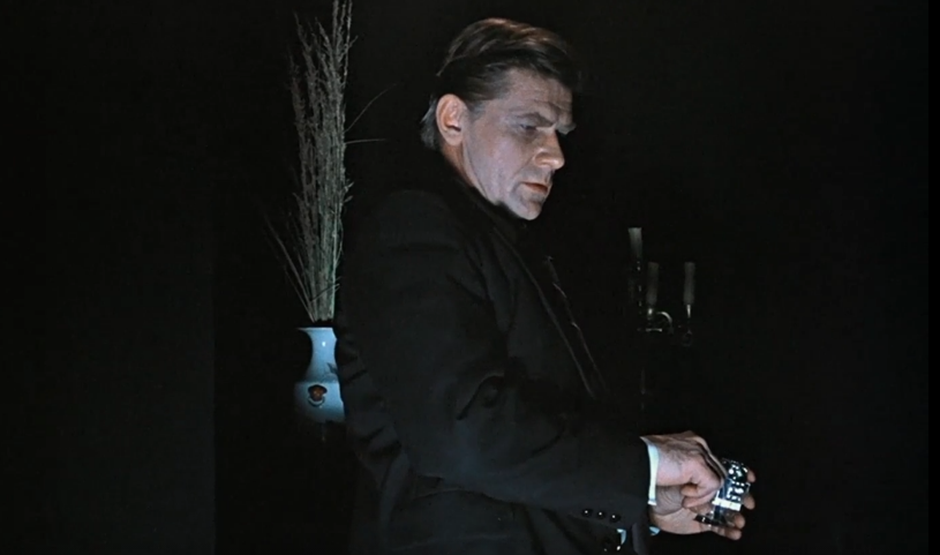
Film noir has always thrived on shadow- moral, psychological and literal. Born from post-war disillusionment, it evokes rain-slicked streets and smoke-filled rooms, where cynical detectives navigate worlds already rotting from within. Though closely tied to mid-20th-century Hollywood, noir was never confined to American cities alone. In Europe, as well as in Soviet and Eastern Bloc cinema, it surfaced in fractured, disguised forms. In the Soviet Union, where film was meant to illuminate rather than obscure, noir’s ambiguity could not fully announce itself, yet its atmosphere of claustrophobic constraint still found expression.
In 1979, far from Hollywood’s boulevards and American anxieties, an Estonian science-fiction film, Grigori Kromanov’s ‘Dead Mountaineer’s Hotel’ borrowed noir’s vocabulary, twisting it into something colder and unmistakably original. Based on a novel by Arkady and Boris Strugatsky, the film follows Inspector Glebsky as he is summoned to a remote Alpine hotel, where an apparently routine inquiry is abruptly transformed after an avalanche seals off the building- and those inside- from the outside world.

A fascinatingly offbeat film, the screenplay- written by the Strugatskys themselves- is deceptively simple. On the surface, it plays like a straightforward mystery: a detective, a hotel, a handful of suspicious guests and a crime that may or may not have occurred. However, proceedings move with an unusual, almost hypnotic slowness, lingering on awkward conversations and strange behaviours, as it quietly slips out of familiar genre boundaries.
The Strugatskys’ characterisation is deliberately oblique, their dialogue often circling rather than advancing, as conversations drift between digression and hesitation. Like an Estonian Twin Peaks, the narrative is less concerned with accumulating clues than with cultivating a mood of disquiet, where behaviour feels slightly off. Characters speak as though withholding something even from themselves, creating the sense that meaning is always present but never quite accessible. The mystery, such as it is, becomes secondary to the unsettling rhythms of interaction that quietly undermine any expectation of narrative clarity.

It is a film that invites deeper contemplation and rewards it. Beneath its unassuming noir structure lies a probing examination of the limits of rationality. Glebsky arrives armed with procedure, assurance and a policeman’s faith in cause and effect, yet the hotel resists every attempt to impose order. Clues contradict one another, motives dissolve and the world reveals itself as larger, weirder and less legible than the tidy narratives one constructs to survive it. His insistence on logic and procedure is a familiar noir blindness: the belief that truth will submit if one simply looks hard enough.
This obliviousness is inseparable from the film’s exploration of authority and empathy. Glebsky trusts systems more than people, and the avalanche that traps the characters turns the hotel into a moral pressure chamber, exposing the limits of that worldview. The sci-fi elements sharpen the critique: outsiders who do not fit cleanly into human categories transform the story into an allegory about fear of difference and about how institutions so easily mistake unfamiliarity for threat. The tragedy that follows is not born of malice but of certainty- the irreversible harm done by a man who believes he is doing his duty, who only understands the cost once it is too late.

All of this is reinforced by the film’s distinctive cinematography, borrowing heavily from noir’s visual language. Jüri Sillart shoots the hotel as a space suspended between the familiar and the uncanny: warm wooden interiors swallowed by pockets of shadow, faces half-lit in tight close-ups that reveal everything and nothing at once. His reliance on close-ups is especially striking- at times overused- but often effective, the camera lingering on Glebsky’s expression as if trying to catch the moment his conviction begins to crack, and on the guests’ unreadable gazes, which seem to conceal more than dialogue ever could reveal.
Against this, the exteriors form a stark counterpoint. The snow-capped mountains are blindingly white, almost abstract in their purity, a vast, indifferent landscape that recalls noir’s moral void transposed into nature itself. The contrast between the two- the harsh, open emptiness outside and the dim, airless rooms within- reinforces the film’s sense of entrapment, as though the world itself were conspiring to keep its secrets hidden.

The film’s production design contributes to this quietly strange atmosphere. The hotel’s interiors- which somehow appear both old-fashioned and futuristic- feel faintly stage-like and otherworldly. Sirje Haagel’s editing reinforces this mood, subtly unsettling the viewer without ever drawing attention to itself, even if the film’s slow-burn approach occasionally tests patience, and its ending is a little brusque. Sven Grünberg’s electronic score, cool and otherworldly, gives the film an eerie, contemplative pulse, setting it apart from both traditional noir and Soviet-era genre cinema.
Uldis Pūcītis makes for a fine lead, playing Glebsky with a gradually fraying bureaucratic composure. His work is built on tiny fissures- a tightening jaw, a delayed reaction, a glance held a beat too long- that reveal the inspector’s growing doubt long before he admits it to himself. His supporting cast- particularly Jüri Järvet, Nijole Ozelyte and Mikk Mikiver- all impress, offering subtly off-key performances that intensify the film’s odd atmosphere.

Ultimately, Grigori Kromanov’s ‘Dead Mountaineer’s Hotel’ is a film where the uncanny and the human are inseparable. Although its ending is rather abrupt, the cinematography, the Strugatskys’ screenplay and the performances all work in concert to create an original, intriguing piece of work. It is a noir not defined by urban gloom or American archetypes, but by moral uncertainty and the limits of understanding. Long after its final images fade, the film lingers like a half-remembered dream: unsettling not because of what it reveals, but because of how much it leaves just out of reach.


