


Bad Apples (2025) Review
Updated: Sep 20

There have been many films about teachers dealing with unruly pupils. From François Truffaut's 'The 400 Blows' to Christophe Barratier's 'The Chorus' and Michael Hoffman's 'The Emperor's Club', cinema has frequently explored the trials and tribulations of trying to keep a troublesome student in line. Few, however, have taken things quite as far as Jonatan Etzler's 'Bad Apples'.
A dark comedy, it centres on kindly primary school teacher Maria Spenser, whose job would be ideal were it not for Danny Carter, a volatile troublemaker whose behaviour threatens to derail not just her class but also her career. After an unfortunate confrontation leaves Danny injured, Maria panics and makes a decision that will have profound consequences for them both. Can Maria keep what happened under wraps, or will her moment of panic have consequences she cannot control?

Based on Rasmus Lindgren's novel 'De Oönskade,' and with a screenplay by Jess O'Kane, it's a delightfully dark piece. Funny from the outset, O'Kane's dialogue is sharp and the characterisation nuanced. Unpredictable and engrossing, the film subverts the idea that teachers and parents are always looking out for children's best interests. O'Kane's screenplay also cleverly avoids spelling everything out.
It's never directly stated what is causing Danny to act out; rather, certain things can be inferred. His mother is conspicuously absent, while his father has emotional issues of his own, lamenting that he wasn't there for his son as often as he should have been. One doesn't need a degree in pop psychology to put two and two together.

As the film's deeper thematic concerns begin to crystallise, Danny's behaviour hints at the consequences of an unstable home life. Further, Maria's increasingly desperate actions reflect the pressure placed on teachers to deal with problems they are ill-equipped to solve. The film's moral ambiguity grows naturally from this environment: Maria's mistake is indefensible, but it doesn't happen in a vacuum. By this point, several adults have already failed in their responsibilities.
This confident, multi-faceted writing extends to the characters. Maria is not a villain, but someone dealing with the ramifications of a knee-jerk mistake. She acts pretty atrociously, yes, but we understand why. Danny is also not simply a victim; he's a pretty horrible little tyke, though not unlikeable. In fact, such is the nuance of O'Kane's characterisation that the most detestable character in the piece is neither Maria nor the violent boy, but Pauline, a bespectacled teacher's pet. Even she is given a backstory explaining why she might be the way she is- her father clearly thinking her "weird" for wanting to read books.
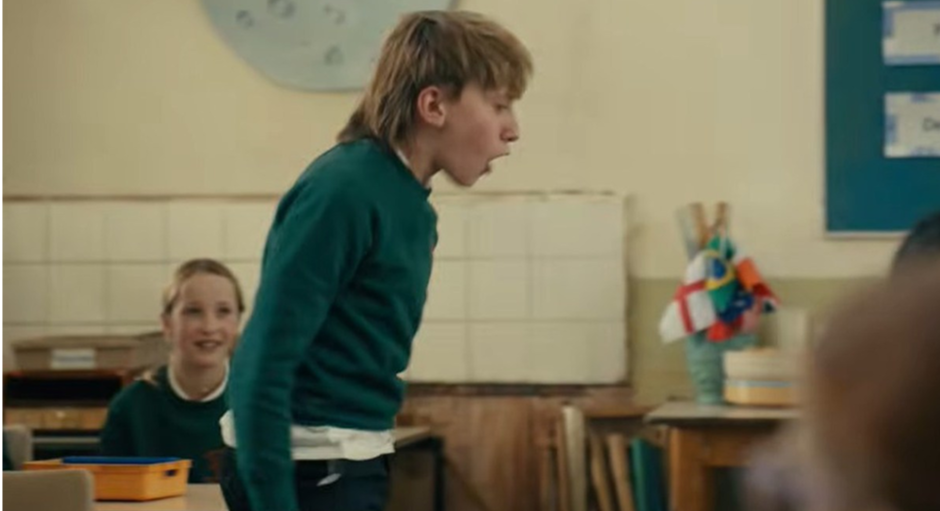
Etzler directs with a deft hand. Given the nature of its premise, 'Bad Apples' could easily have descended into broad farce, but he keeps things grounded enough for the characters to remain believable. He also understands that humour is often funniest when played with a straight face, allowing the absurdity of the situation to speak for itself.
Nea Asphäll's cinematography and Jacqueline Abrahams' production design create a convincing sense of place without ever becoming overblown, with the house proving particularly effective. Robert Krantz's editing is similarly assured, maintaining a strong sense of rhythm and pacing that keeps things moving briskly. An immersive score from Chris Roe further adds to the atmosphere, drawing us deeper into Maria's increasingly nightmarish predicament.
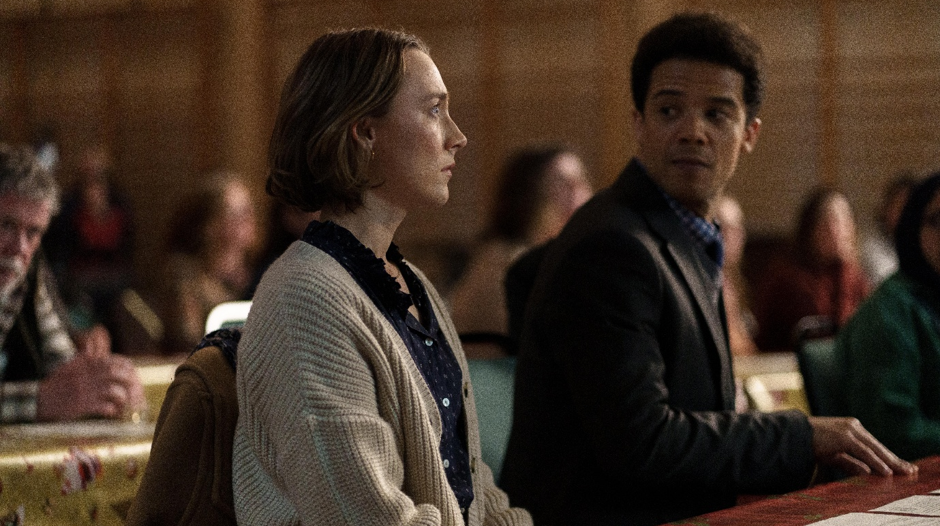
The cast are excellent, too. Saoirse Ronan is brilliant as Maria, getting under the skin of a character who, on paper, is quite difficult to understand. It's a layered performance; despite the increasingly questionable choices Maria makes, you never entirely stop rooting for her. Ronan captures her decency, anxiety and desperation without ever letting any one quality overwhelm the other. She also displays great comic timing, without ever veering into caricature.
As Danny, Eddie Waller equally impresses. A lesser actor could easily have turned him into a horrid little tosspot, but Waller subtly brings out the humanity beneath his aggression. Danny can be violent, obnoxious and thoroughly unpleasant, yet Waller ensures that we never lose sight of the fundamentally vulnerable child underneath.

Jacob Anderson also does fine work as Sam, the assistant headmaster and Maria's former partner, while Sean Gilder makes a strong impression in the smaller role of Frank, Pauline's dad. Speaking of Pauline, Nia Brown creates in her a teacher's pet who is convincingly annoying and utterly hateable. Anecdotally, at the screening this reviewer attended, the audience were literally clapping and cheering when Pauline finally got a taste of her own medicine. Given how much sympathy the film manages to find for even its more troublesome characters, making Pauline quite this detestable is an achievement in itself.
Overall, Jonatan Etzler's 'Bad Apples' is a darkly comic and surprisingly nuanced take on the teacher-pupil dynamic. Funny and compelling, and anchored by a terrific Saoirse Ronan, it concerns itself with characters who may behave in rotten ways, but are not rotten to the core. Beneath the humour lies a pointed critique of how schools and families offload responsibility, creating moral grey zones where ordinary people make extraordinary mistakes. It's an entertaining, unpredictable film, leaving a rather nasty taste in the mouth in all the right ways. In short, it's ripe for the picking.


